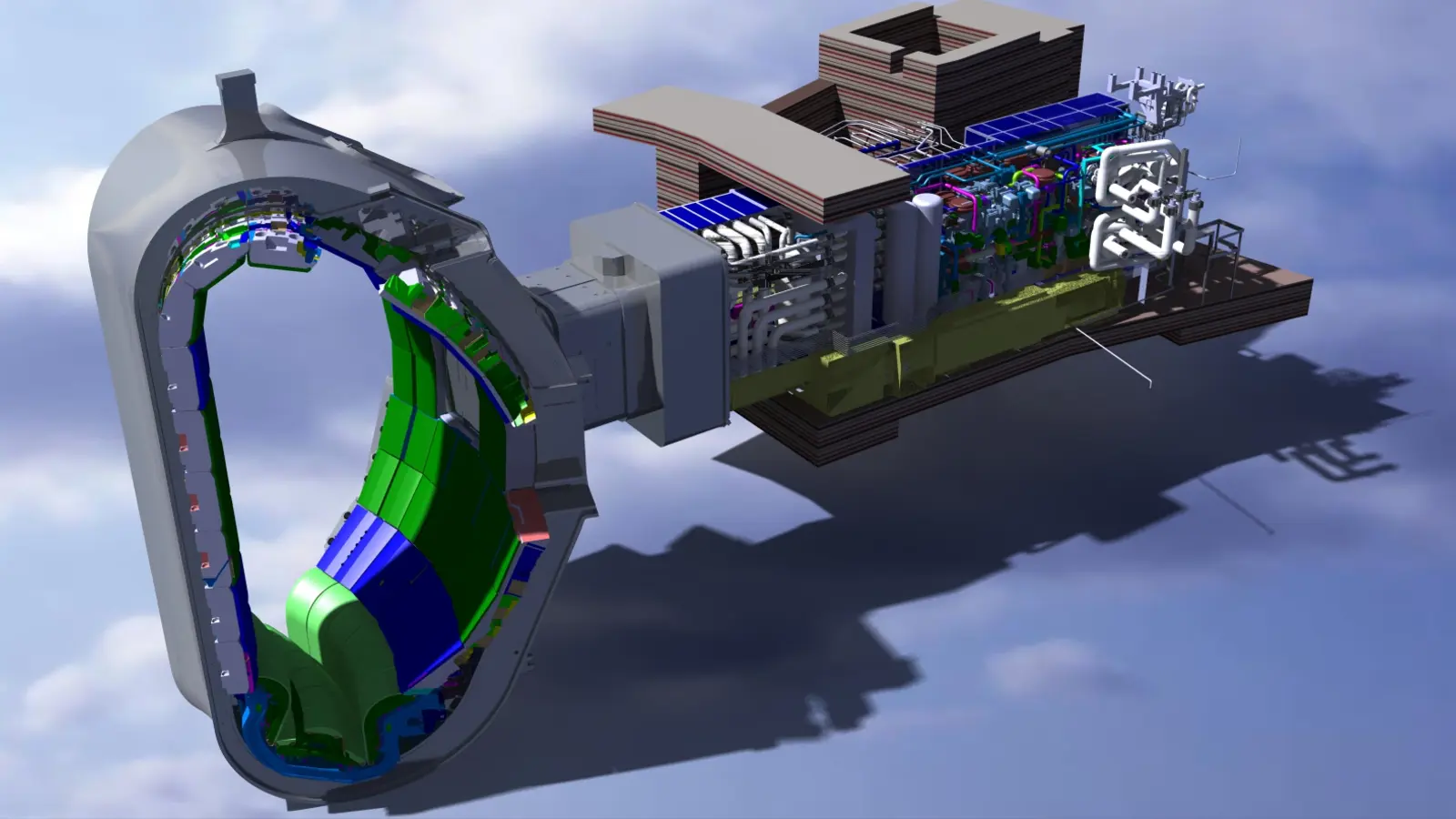
Fuel abundance is not fuel-cycle readiness. Breeding, extraction, inventory and losses form one integrated constraint.
Deuterium is abundant in water. Tritium is not. A deuterium–tritium power plant is generally expected to breed tritium by capturing fusion neutrons in lithium-containing blankets around the plasma.
That sentence hides a complete industrial system. Tritium must be produced at a sufficient ratio, extracted from blanket materials, purified, moved, measured, stored and returned to the plasma. Some inventory remains tied up in components and processing loops. Radioactive decay continues regardless of plant schedule.
The relevant measure is therefore not a theoretical breeding reaction alone. It is a dynamic account of the entire fuel cycle, including startup inventory, reserve margin, processing time, losses and regulatory controls.
Time makes the ledger harder. Tritium produced in a blanket is not instantly available for another pulse. It must travel through extraction and processing systems, while some remains held in materials and equipment. A breeding ratio above one can therefore coexist with a plant that lacks usable fuel at the required moment. Flow and inventory must be modelled together.
Blanket design also interacts with heat extraction, neutron shielding, materials lifetime and maintenance. Optimizing one number in isolation can make another subsystem worse.
Accountancy is part of engineering rather than an administrative layer added later. Measurement uncertainty affects safety margins, reserve requirements and confidence that material has remained inside authorized systems. Instrumentation and process design must be developed as one fuel-cycle architecture.
A credible D–T roadmap should publish the assumptions behind its tritium ledger early. The fuel cycle is not a downstream detail. It is part of the machine.