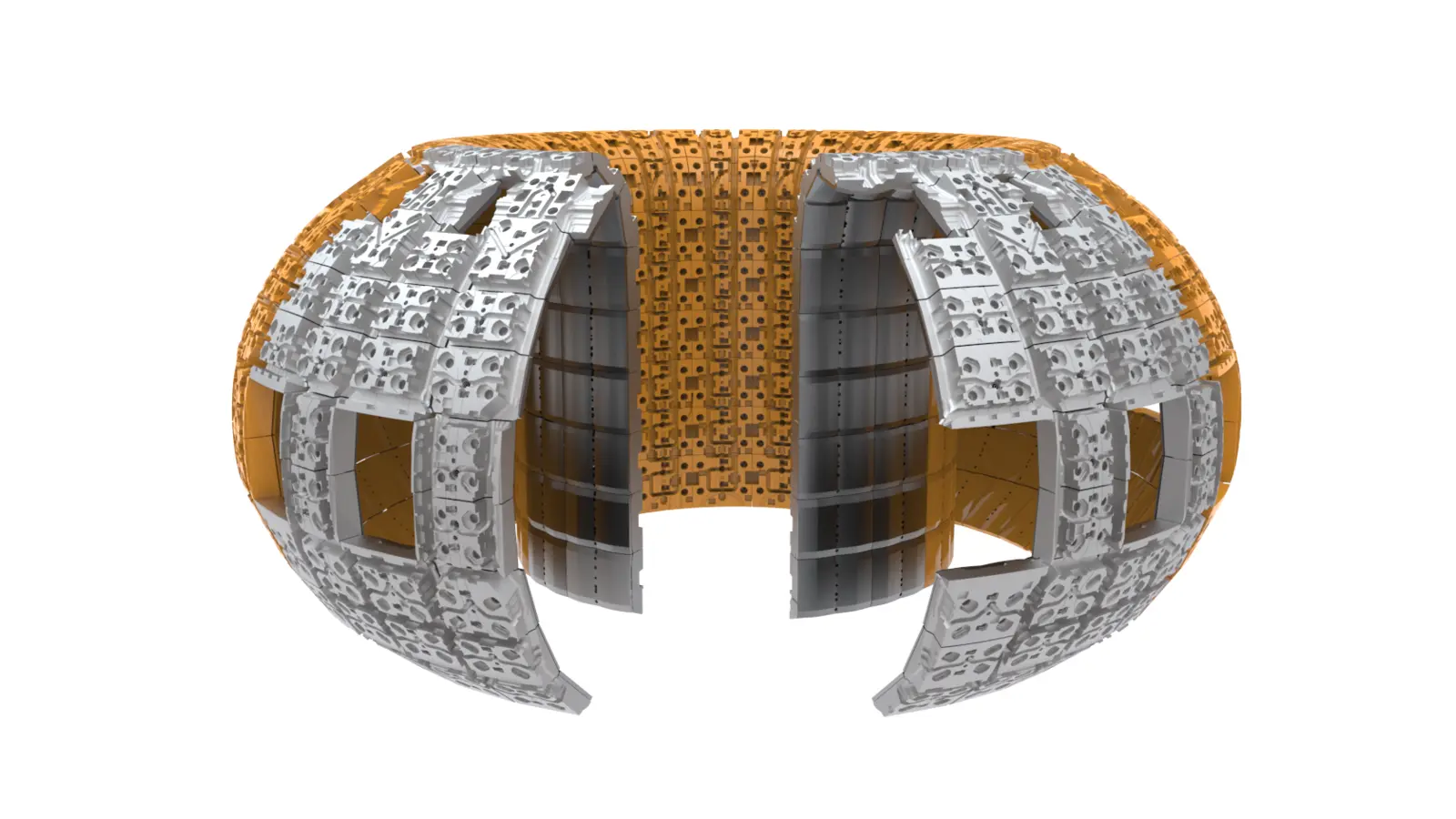
The first wall, blanket and high-heat-flux components are not supporting details. They set the possible lifetime of a fusion plant.
A fusion plasma can last for milliseconds, seconds or much longer depending on the architecture. The materials surrounding it must survive the accumulated consequences for years.
That mismatch in timescale is one of the field’s defining problems. Neutrons change material structures. Heat arrives in severe gradients. Components swell, fatigue and activate. Surfaces erode. Maintenance must often be performed remotely, and every replacement decision affects plant availability and cost.
The Stanford–SLAC report places materials inside the broader category of matter in extremes. That framing is useful because it connects fusion to national-laboratory capabilities, high-energy-density physics, advanced diagnostics and computational materials science.
The investment consequence is that materials knowledge can be a platform capability. Qualification tools, coatings, manufacturing methods, radiation-tolerant sensors and digital models may serve multiple reactor pathways and adjacent extreme-energy markets.
A promising alloy becomes commercially useful only through a qualification pathway that covers reproducible fabrication, inspectable joints, known failure modes and replacement logic. Laboratory performance without a manufacturable path into a vessel, or an account of how degradation affects the whole plant, is incomplete.
Lifetime and maintainability belong in the same economic model. A shorter-lived component may be acceptable if remote replacement is fast and cheap; a durable one may be worse if removal takes months. Availability settles the comparison.
In fusion, lifetime is economics written in materials science.